
The Science-Backed Health Benefits of Coloring (Infographic)
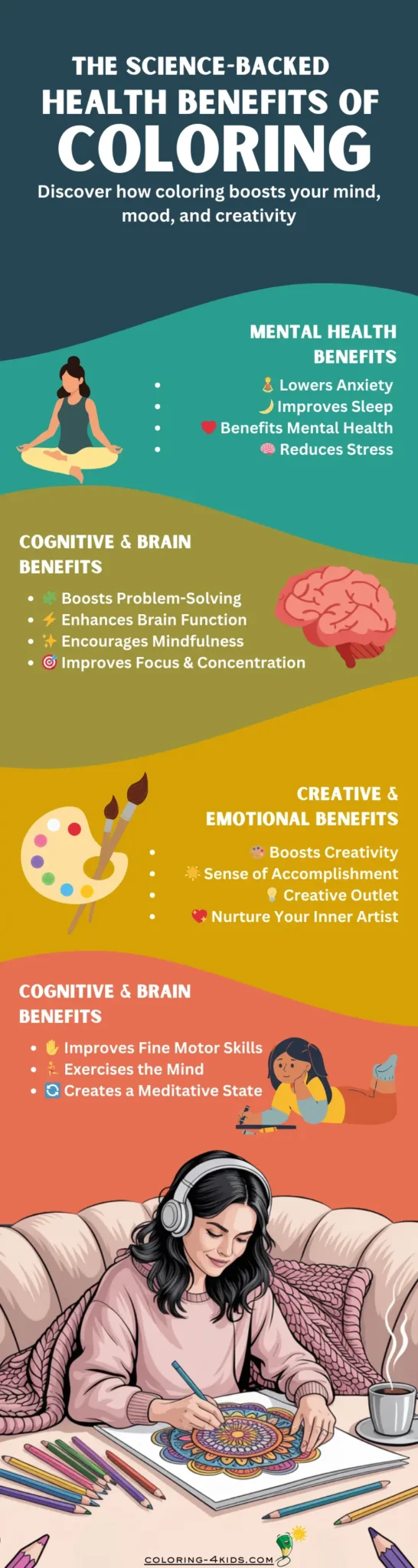
Coloring is not just fun. It helps kids grow, learn, and feel good inside.
When children sit down with crayons and a coloring page, something powerful happens. Their minds slow down. Their focus improves. Their creativity comes alive.
Research shows that coloring can help kids:
Feel calmer and less stressed
Improve focus and concentration
Build fine motor skills
Practice patience
Strengthen problem solving
Boost confidence and creativity
Coloring also gives kids a healthy, screen free break. Instead of scrolling or tapping, they use their hands, imagination, and attention. It’s simple, but it works.
Whether your child is coloring animals, letters, superheroes, or holiday pages, they are building important skills while having fun.
Why Coloring Pages Matter
Coloring pages are more than just paper and crayons. They help kids:
Train their hands and fingers for writing
Learn to stay inside lines and follow shapes
Make creative choices with colors
Feel proud when they finish a page
That feeling of “I did it” builds confidence. And confidence helps kids try new things.
📌 Share This Infographic
Copy and paste the code below to add this infographic to your website:
Text Version of the Infographic
🧘 Mental Health Benefits
Lowers anxiety
Improves sleep
Benefits overall mental health
Reduces stress
🧠 Cognitive & Brain Benefits
Improves focus and concentration
Boosts problem-solving skills
Enhances brain function
Encourages mindfulness
🎨 Creativity & Emotional Benefits
Boosts creativity
Provides a sense of accomplishment
Offers a creative outlet
Nurtures your inner artist
✋ Physical & Motor Skills
Improves fine motor skills
Exercises the mind
Creates a meditative state
Supports relaxation through action
Download & Share
Final Thought
Just 20 minutes of coloring can help kids relax and reset.
Coloring is a calm, happy activity that supports emotional health, focus, and creativity. It’s one of the easiest ways to turn screen time into creative time.
Ready to get started?
Explore our Free Coloring Pages Library and give your child a fun, creative break today.
Frequently Asked Questions About Coloring Benefits
Yes. Multiple studies show that coloring can lower cortisol levels and bring calm, particularly when focusing on repetitive, structured patterns.
Structured patterns such as mandalas or geometric designs tend to be most effective. The repetition and symmetry help quiet the mind more than free-form drawing.
Yes. Coloring before bedtime can help reduce racing thoughts and transition the brain into a calmer state, which supports better sleep quality.
Yes. Coloring requires sustained attention and fine motor control, which can sharpen focus and train the brain to concentrate for longer periods.
Coloring stimulates the creative side of the brain, allowing self-expression, idea flow, and a sense of accomplishment — even if you’re following pre-drawn designs.
Yes. The fine motor movement of coloring engages the brain in precision, coordination, and problem solving, making it a beneficial exercise for both children and adults.
Coloring has been shown to reduce symptoms of anxiety and depression, promote mindfulness, and provide an accessible, low-cost form of self-care.
The stress-relieving benefits are immediate (within minutes). Long-term benefits like improved focus and emotional regulation come from regular practice.
Adults seeking stress relief
Students needing better focus
Seniors looking to maintain cognitive health
Therapists and educators using it as a mindfulness tool
Coloring helps reduce stress, lower anxiety, improve focus, boost creativity, and provide a calming mindfulness practice.
Yes. Coloring stimulates the creative centers of the brain, encouraging imagination and artistic expression even when using pre-drawn designs.
Coloring develops fine motor skills, hand-eye coordination, concentration, patience, and the ability to follow patterns.
Yes. Studies show coloring can lower anxiety, improve mood, and promote mindfulness — making it beneficial for mental and emotional health.
Coloring supports fine motor control, focus, problem solving, color recognition, and planning skills.
Coloring shares similarities with art therapy but isn’t the same. Art therapy involves a licensed therapist guiding creative expression, while coloring is a self-help tool for relaxation.
Yes. Coloring engages visual, tactile, and sometimes auditory senses (sound of pencil or marker), making it a calming sensory experience.
Yes. Coloring requires present-moment focus, repetitive motion, and attention to detail, which are all aspects of mindfulness practice.
Free Giveaway!
Coloring Books, Worksheet & More.
Sign up to our Newsletter for a Free Giveaway!