Emotions coloring pages for kids
Happy, sad, angry, scared and many other faces give children a visual way to notice how expressions can look.
- Free to print
- Ages 3–10
- Letter & A4
What’s in these emotions coloring pages
Feelings from everyday to tricky, each shown as a child acting out the emotion with the word in big bubble letters above: happy, sad, angry, scared, shy, proud, frustrated, homesick, jealous, embarrassed, calm and many more. Look at the body as well as the face: crossed arms, a stamped foot, hands over cheeks.
How these pages help
- Gives kids words for feelingsA child who can say “frustrated” instead of screaming has a real tool.
- Teaches body cluesEach page shows how a feeling looks in posture, not just in the face.
- Feels safe to talk aboutIt is easier to discuss why the boy on the page is sad than why you are.
- Builds a feelings chartPrint a set, color them over a week and pin them up as a check-in board.
Choose a page to print
Print opens a ready-to-print page. PDF downloads US Letter; A4 is for the rest of the world.
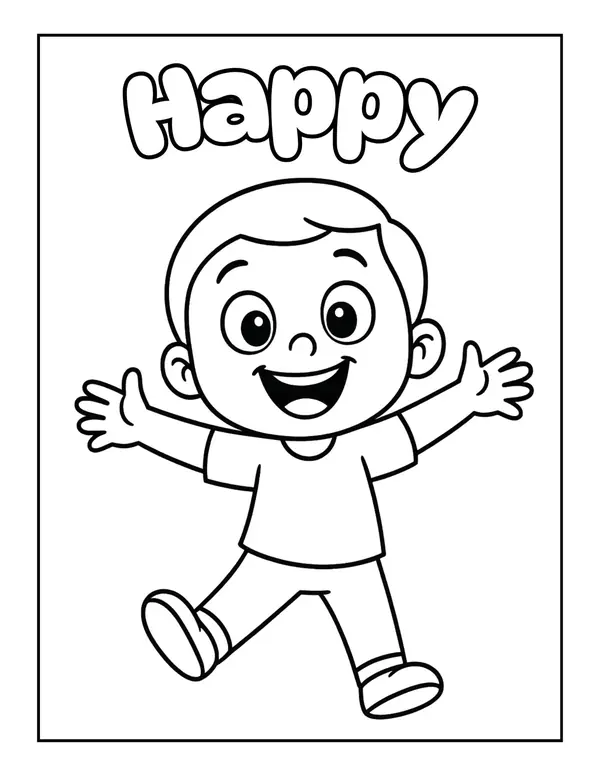
Happy
Medium · ages 6–10
A boy leaps with arms flung wide and a huge grin. Ask what makes the child feel this way.
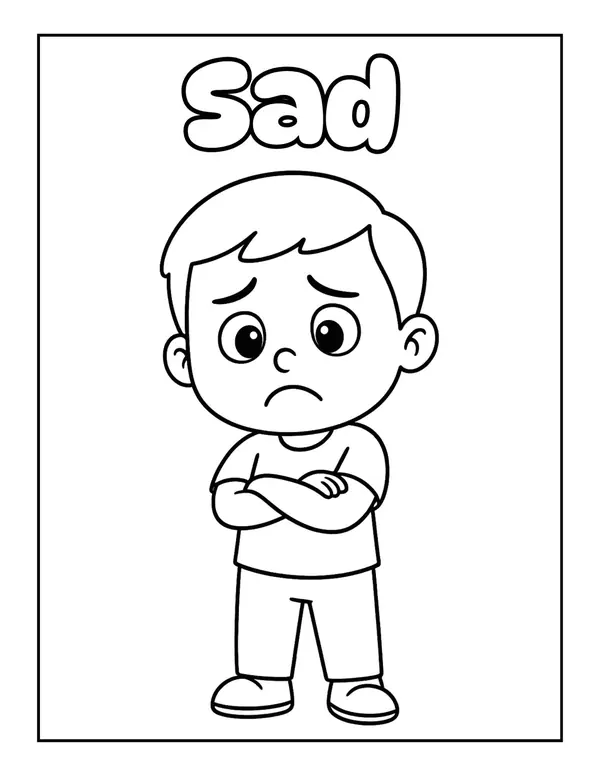
Sad
Medium · ages 6–10
A boy with crossed arms and a wobbly frown. A safe way to talk about sad days without making it personal.
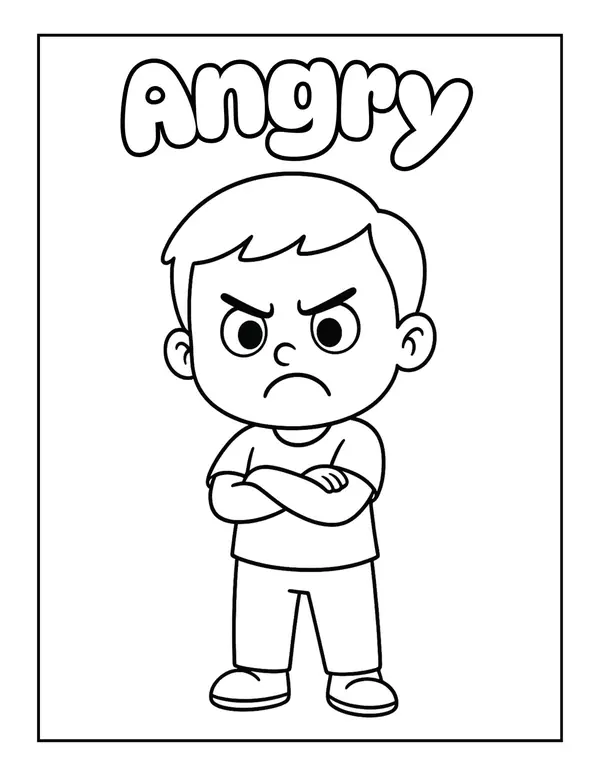
Angry
Medium · ages 6–10
Crossed arms, a scowl and a stamped foot. Kids can show what angry looks like before naming it.
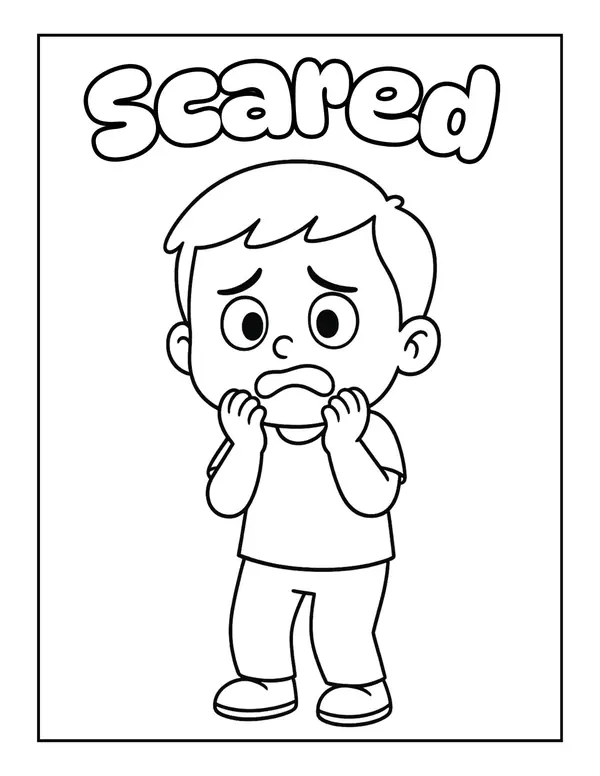
Scared
Medium · ages 6–10
A boy bites his nails with wide, worried eyes. Talk about what helps when something feels scary.
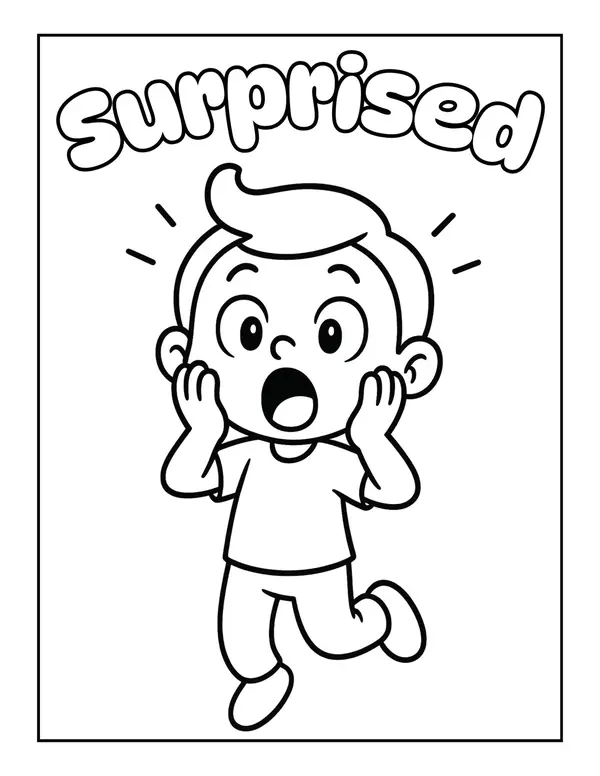
Surprised
Medium · ages 6–10
Hands on cheeks and mouth wide open. Ask about a good surprise and a not-so-good one.
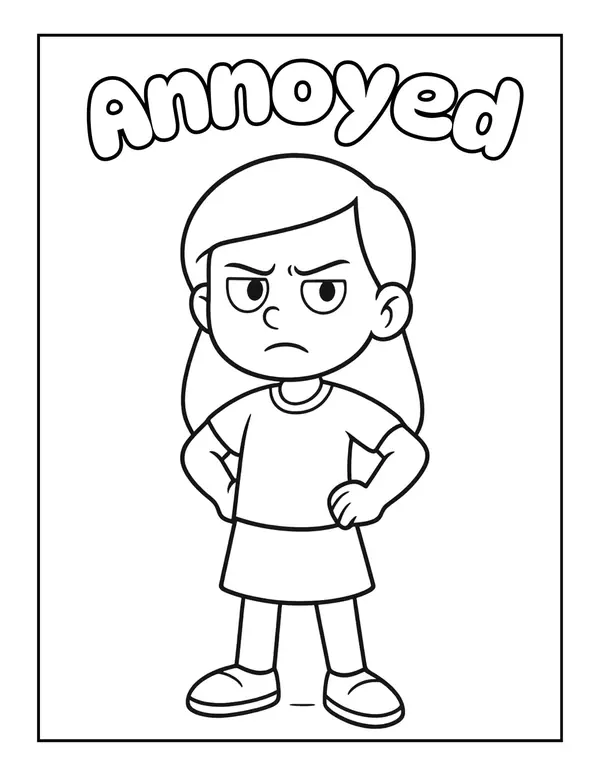
Annoyed
Medium · ages 6–10
A girl with hands on hips and a side-eye glare. Shows that annoyed is smaller than angry.
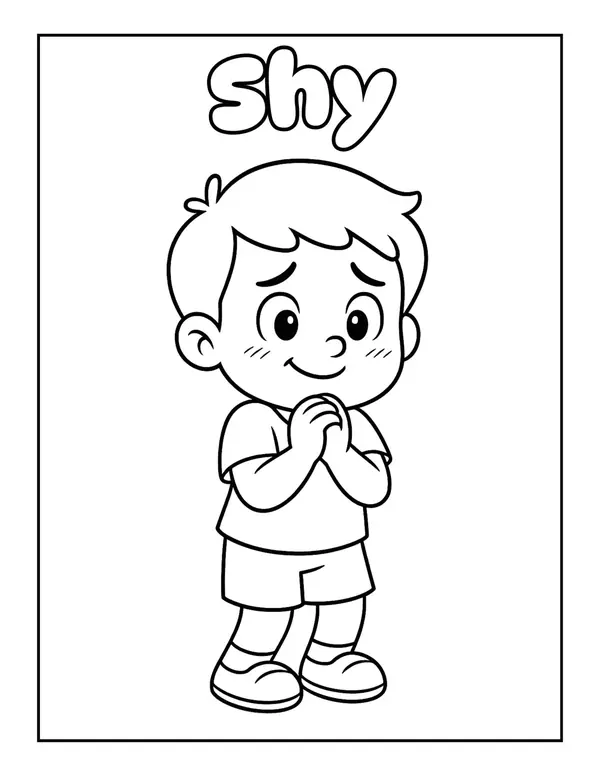
Shy
Medium · ages 6–10
A boy with rosy cheeks, fiddling with his hands. Many kids recognize this one right away.
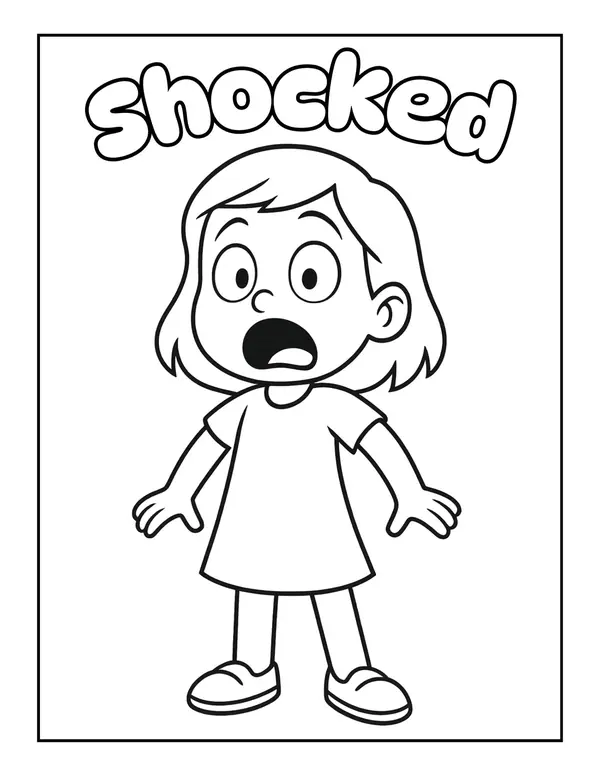
Shocked
Medium · ages 6–10
A girl frozen with eyes wide and mouth open. Compare her with the surprised face.
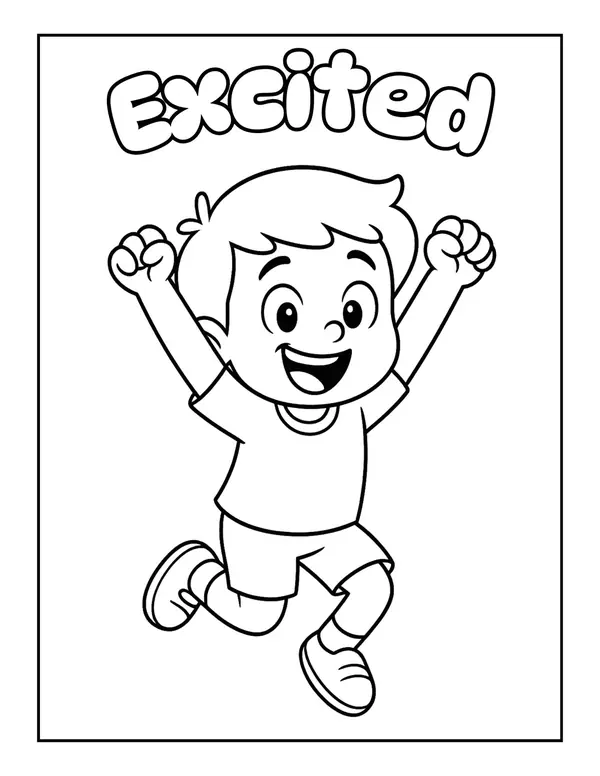
Excited
Medium · ages 6–10
A boy jumps with both fists in the air. Ask what the child is looking forward to.
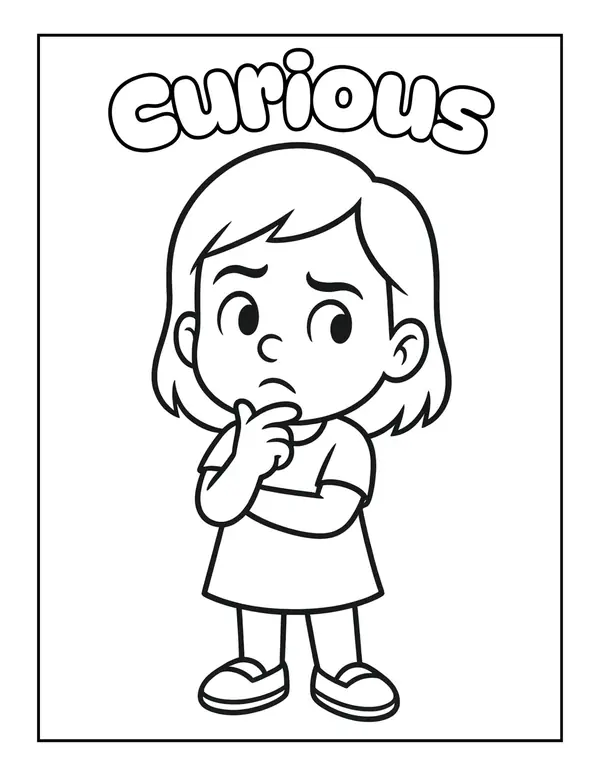
Curious
Medium · ages 6–10
A girl taps her chin, wondering. A good face for talking about questions.
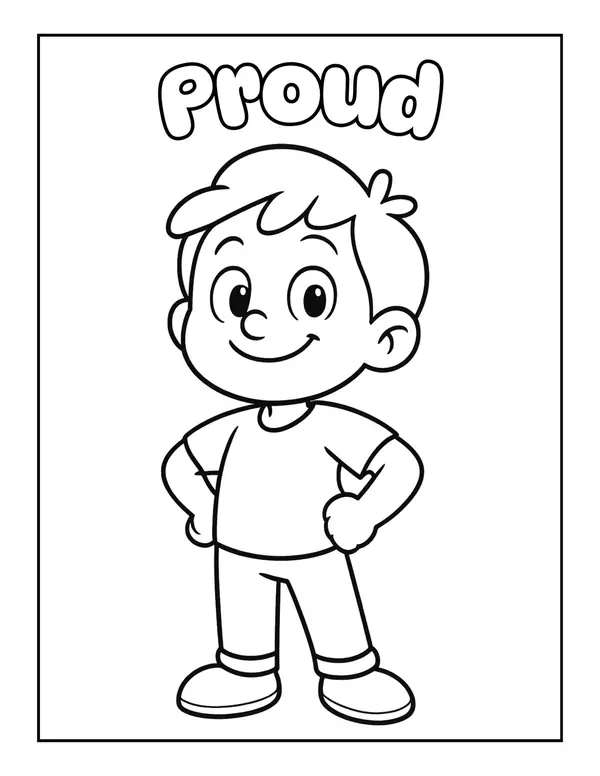
Proud
Medium · ages 6–10
Hands on hips and a confident smile. Ask about something the child worked hard on.
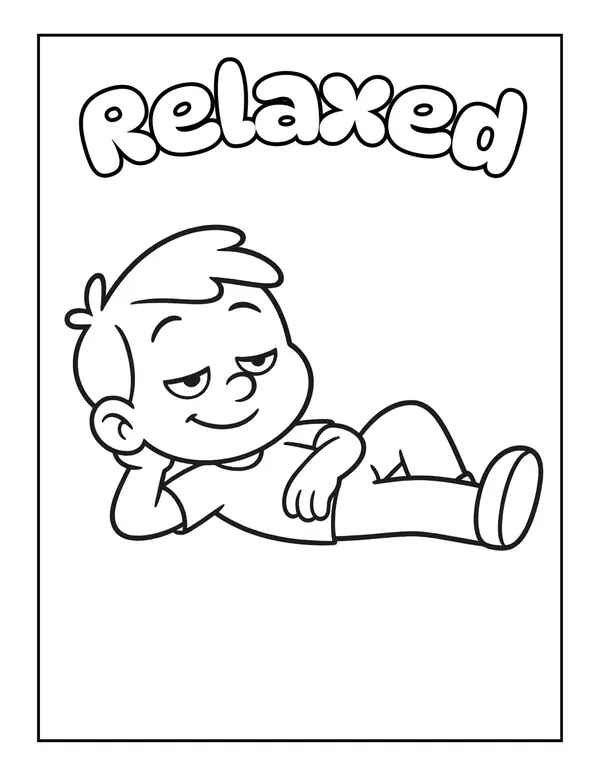
Relaxed
Medium · ages 6–10
A boy lies back with his hands behind his head. A calm page for the end of a feelings session.
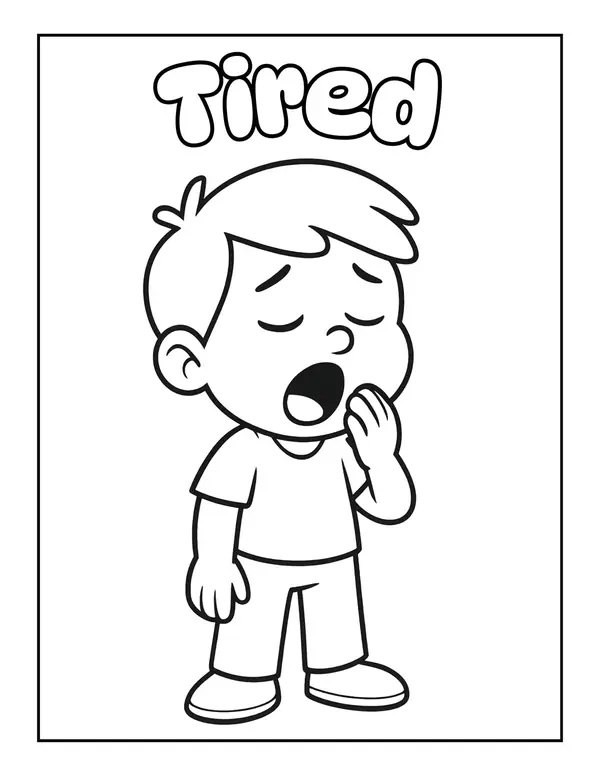
Tired
Medium · ages 6–10
A big yawn and heavy eyes. Talk about how being tired can change other feelings.
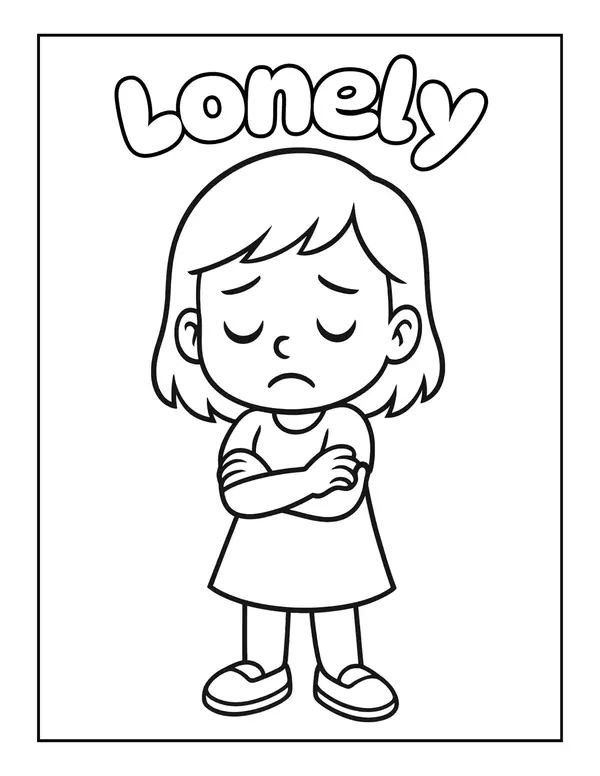
Lonely
Medium · ages 6–10
A girl hugs herself and looks down. A gentle opening to talk about friends and belonging.
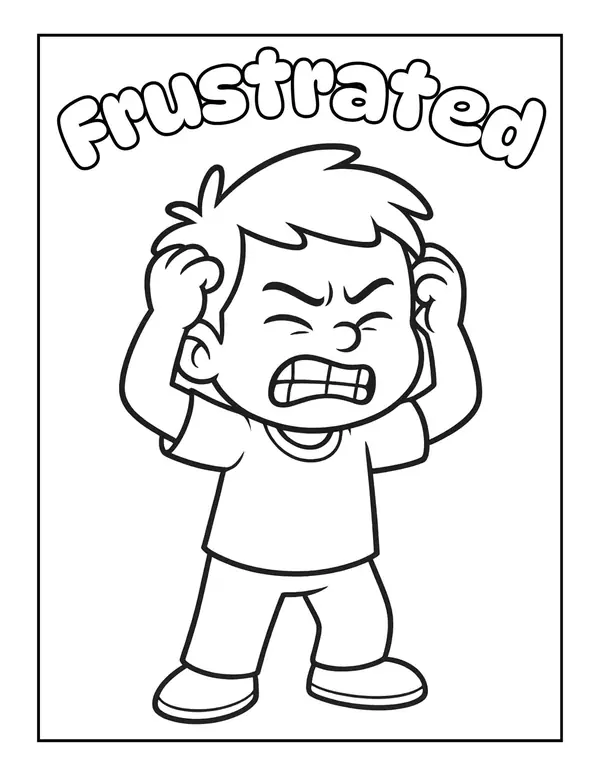
Frustrated
Medium · ages 6–10
Hands in his hair and teeth clenched. Talk about times something was hard to do.
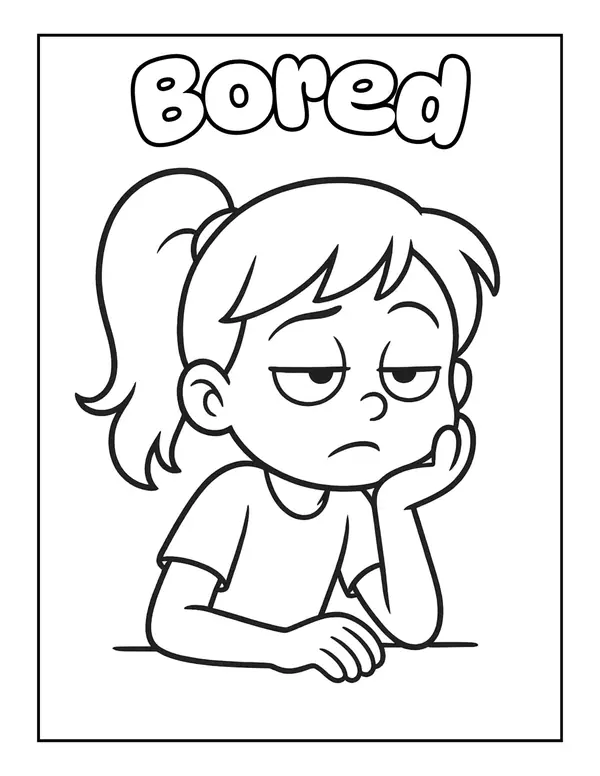
Bored
Medium · ages 6–10
A girl slumps on the table, chin in hand. Brainstorm what to do next time boredom hits.
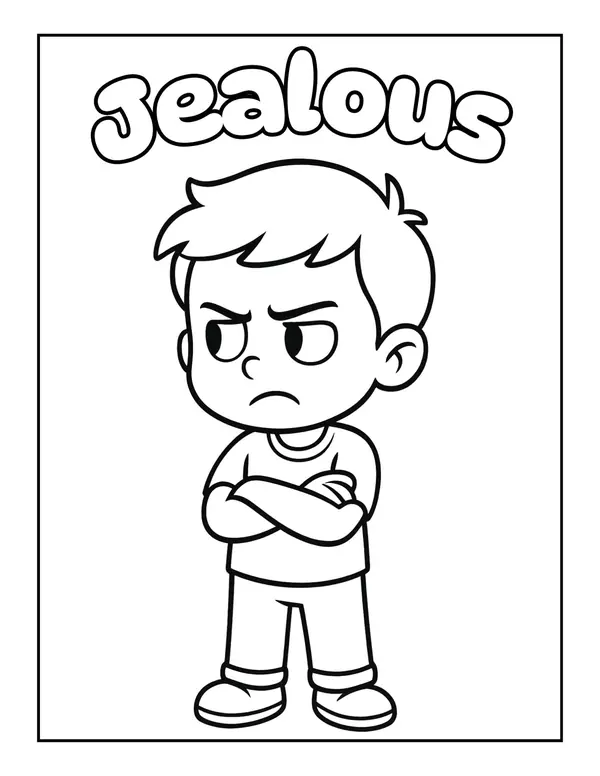
Jealous
Medium · ages 6–10
A boy scowls sideways with crossed arms. A tricky feeling that is easier to discuss as a picture.
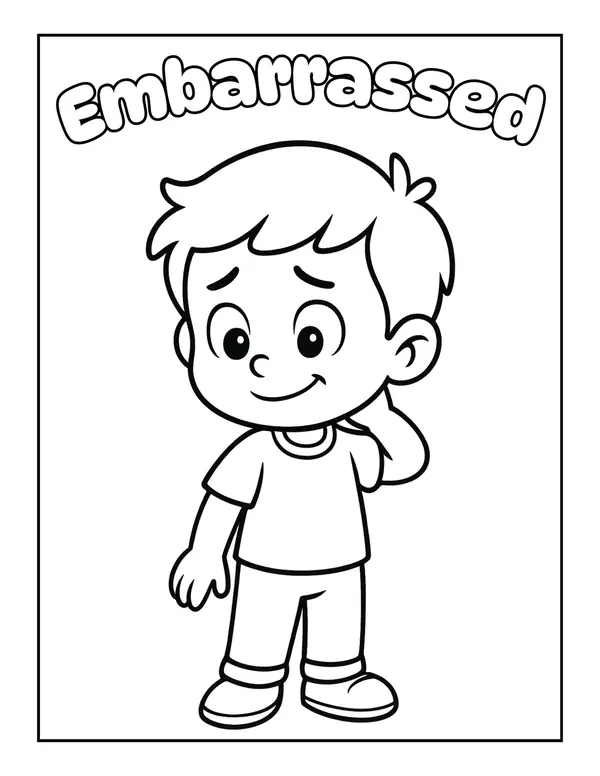
Embarrassed
Medium · ages 6–10
A boy rubs the back of his neck with an awkward smile. Everyone feels this sometimes.
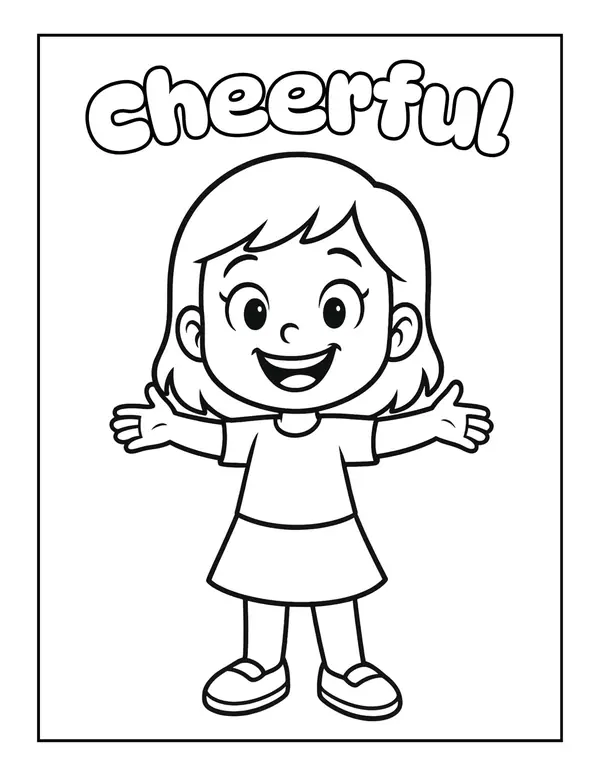
Cheerful
Medium · ages 6–10
A girl beams with arms held out. A light page to finish on.
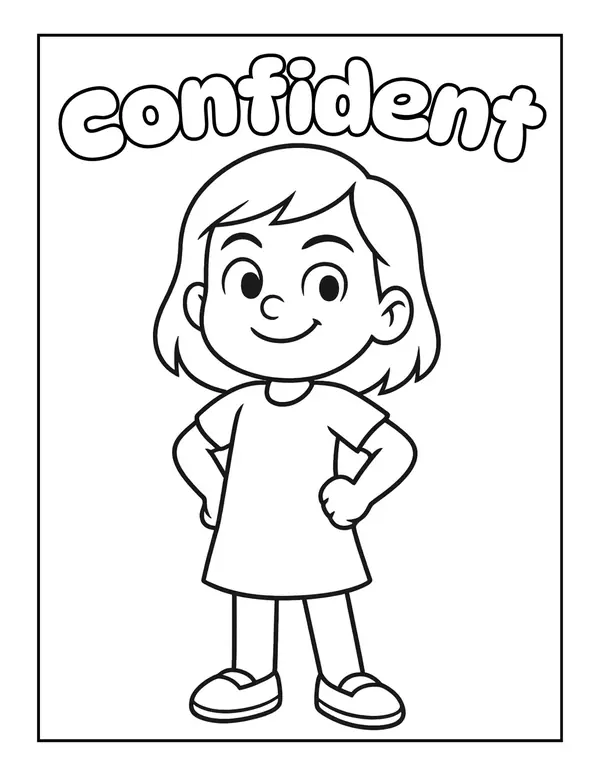
Confident
Medium · ages 6–10
A girl stands tall, hands on hips. Talk about times the child felt brave.
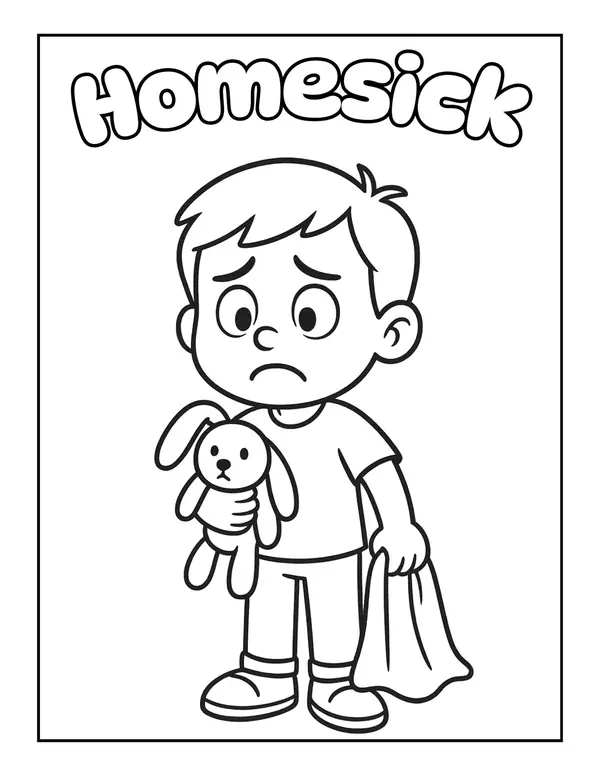
Homesick
Medium · ages 6–10
A boy clutches a toy bunny and blanket, looking glum. Helpful before sleepovers, camp or a new school.
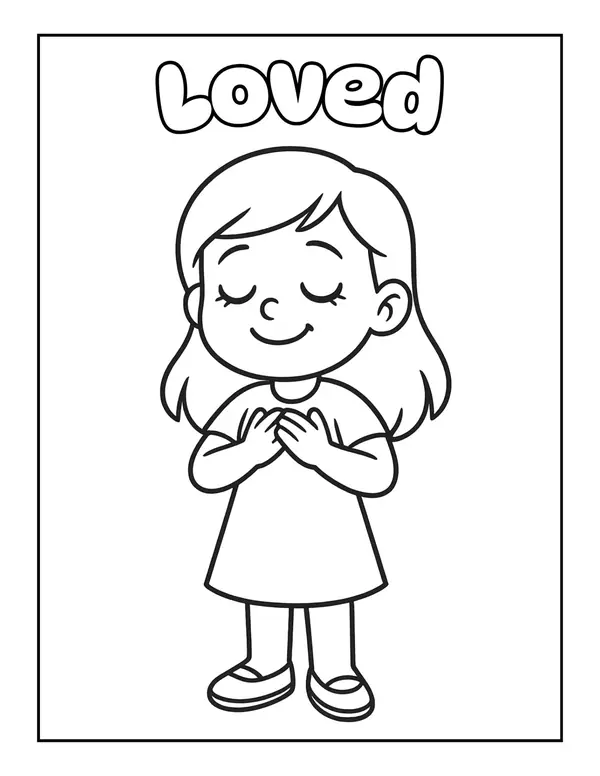
Loved
Medium · ages 6–10
A girl with eyes closed and hands on her heart. Ask who makes the child feel loved.
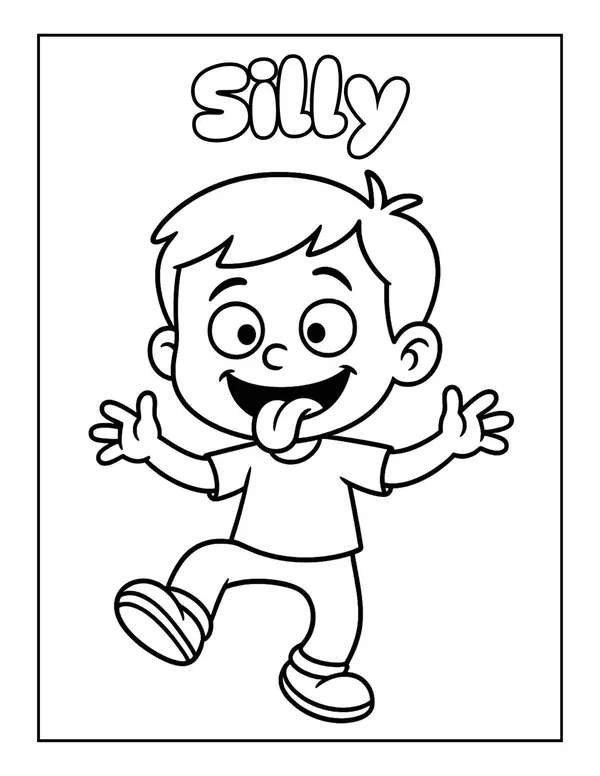
Silly
Medium · ages 6–10
Tongue out and arms wiggling. Guaranteed giggles.
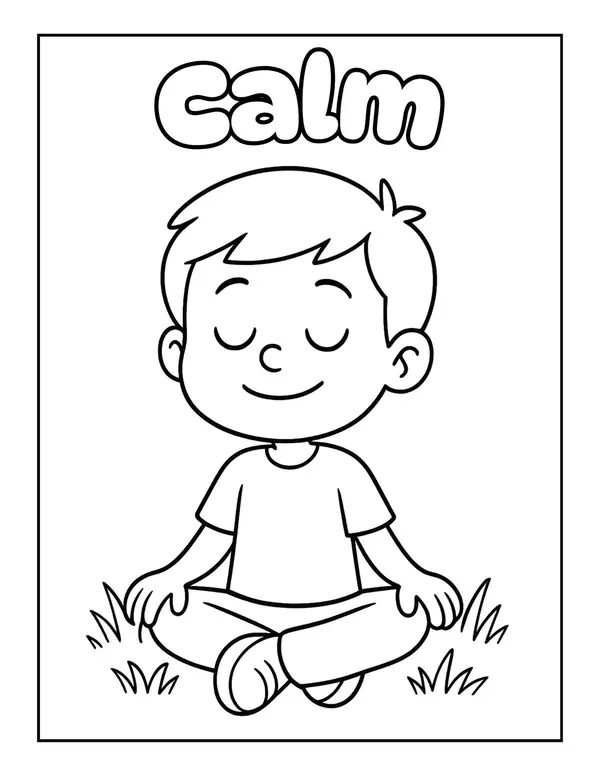
Calm
Medium · ages 6–10
A boy sits cross-legged with eyes closed. Pairs well with a few slow breaths.
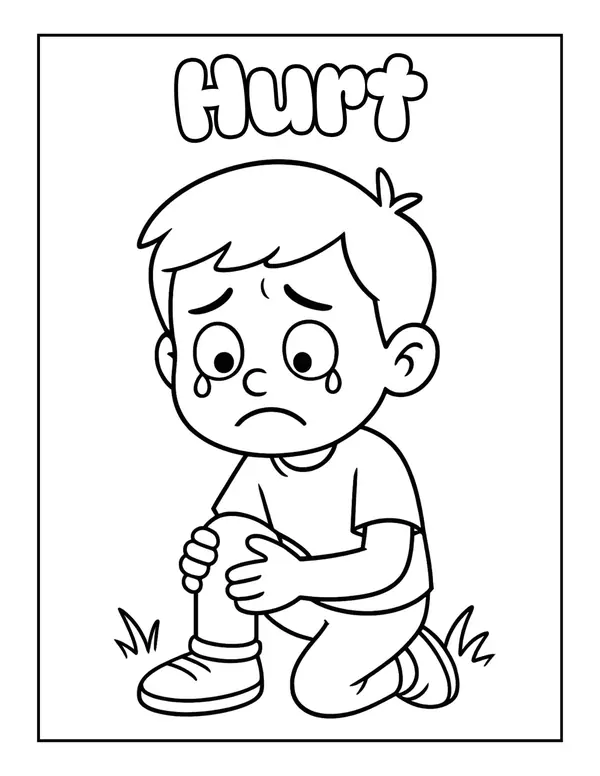
Hurt
Medium · ages 6–10
A boy holds his knee with a tear on his cheek. Hurt can mean a body or feelings, and both are worth talking about.
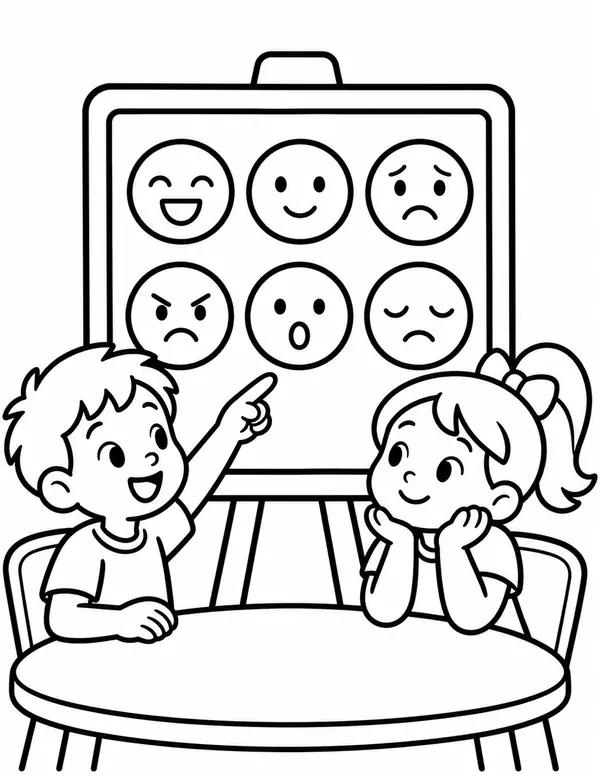
Naming A Big Feeling
Easy · ages 3–5
Two kids point at a feelings chart with six faces. A starting page for learning feeling words.
Download the whole set as one PDF
Want a whole book?
Prefer one download? The emotions coloring pages are also in the free Feelings & Coping Coloring Book, with a cover, name page and certificate.
How to use these pages
Choose a face and ask what clues you see in its eyes or mouth. A child may give it a name or tell a story about what happened before the picture.
Print several different faces to compare. Avoid treating a single facial expression as proof of how a real person feels.
Questions to ask while you color
- What feeling do you notice in happy? What gives you the clue?
- What feeling do you notice in sad? What gives you the clue?
- What feeling do you notice in angry? What gives you the clue?
- What feeling do you notice in scared? What gives you the clue?
- What feeling do you notice in surprised? What gives you the clue?
Looking for more? Try Calm down corner coloring pages and printables or Coping skills coloring pages.
Frequently asked questions
Can a child color a face in an unexpected way?
Of course. Colors do not have to stand for fixed emotions. Ask the child what their color choices mean to them.
What ages are these emotions coloring pages for?
The emotions coloring pages mix two levels. Pages marked Easy have bold lines and big spaces for ages 3–5; pages marked Medium add a little more detail for ages 6–10. Look for the label under each picture.
Can I print the emotions coloring pages for a class or clinic?
Yes, the emotions coloring pages are free to print in any quantity for a classroom, library, therapy room or clinic, as well as at home. Please do not sell them or upload them to another website.